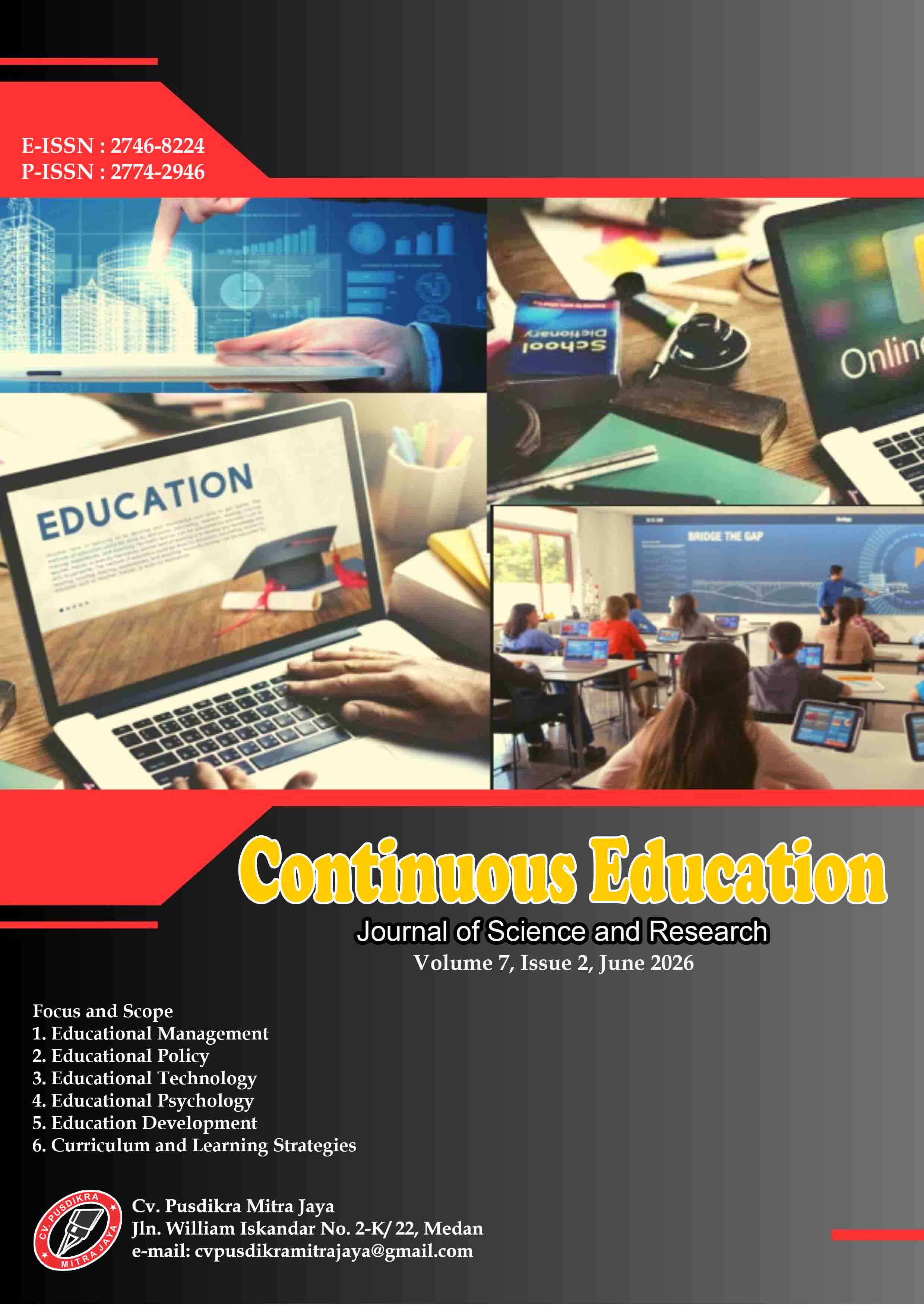
Improving Students' Reading and Writing Literacy through Children's Digital Books Gemudaya.com for Fifth-Grade Students at Madrasah Ibtidaiyah
DOI:
https://doi.org/10.51178/ce.v7i2.3031Keywords:
Reading Literacy, Writing Literacy, Children’s Digital BooksAbstract
Students’ reading and writing literacy in Indonesia remains low, as reflected in the 2022 PISA score of 359, far below the OECD average. This classroom action research aims to describe the implementation of Gemudaya.com children’s digital books and improve the reading and writing literacy skills of fifth-grade students at Madrasah Ibtidaiyah Istana Berkah Abadi (IBA), Jambi City. The research used the Kemmis and McTaggart model conducted in two cycles. The subjects were 23 fifth-grade students. Data collection instruments included observation sheets of teacher and student activities, learning interest observation sheets, literacy tests, and interview guidelines. The results showed that the implementation of Gemudaya.com children’s digital books was conducted through the following stages: preparing student Google accounts, demonstrating digital book navigation and features, 25 minutes of independent reading, heterogeneous group discussions, phased writing assignments with scaffolding worksheets, and providing rewards and reflection. Students’ literacy skills improved significantly from the pre-cycle condition (27%) to 40.4% in Cycle I, and jumped to 80.1% in Cycle II. The total increase reached 53.1 percentage points. The indicators with the highest improvement were writing responses (+61.6 percentage points) and inferential ability (+56.6 percentage points). This research concludes that Gemudaya.com children’s digital books are effective in improving the literacy skills of Islamic elementary school students. The implication is that teachers, schools, and policymakers can utilize curated digital children’s books as a supplementary literacy medium, while ensuring device readiness, scaffolding, and sustained creative writing practice.
Downloads
Published
How to Cite
Issue
Section
License
Copyright (c) 2026 Joti Putri Amelia, Siti Mariah Ulfahuthor, Sean Popo Hardi

This work is licensed under a Creative Commons Attribution 4.0 International License.